Law and tax
Land lease in Ethiopia: how urban land works and what it costs
In Ethiopia you cannot buy land outright. The state and the people own all land, and individuals hold urban land through a lease from the city. In Addis Ababa a residential lease runs for up to 99 years, and the city allocates new plots mainly through public auctions.
When a listing says "land for sale in Addis Ababa", the seller is transferring a lease right, often with a house or a foundation on the plot. This guide explains how leases work, what they cost and what to check before you pay.
This guide is general information, not legal advice. Lease rules change through city regulations. Confirm the status of any plot at the sub-city land office.
Who owns land in Ethiopia
Article 40 of the Constitution vests ownership of land in the state and the peoples of Ethiopia. Land cannot be sold or exchanged. A person holds a right to use it.
In cities, that right takes two forms:
- Leasehold. The holder signs a lease contract with the city, pays a lease price and gets a lease certificate. All new urban land is leasehold.
- Old possession. Some plots date from before the lease system. Families hold them under older titles. Cities convert these to leasehold over time, for example when the use changes or the holder regularizes the plot.
The buyer of a house always takes over the land right under the house. A building and its land right transfer together unless the contract says otherwise.
The law: Proclamation No. 721/2011
The Urban Lands Lease Holding Proclamation No. 721/2011 is the main federal law. It replaced Proclamation No. 272/2002. It was amended in 2024, and regions and cities issue their own regulations under it.
Key rules:
- No person may get urban land outside the lease system.
- A lease is granted only if the use fits the urban plan.
- Cities grant leases by tender (auction) or by allotment.
- Every plot has a benchmark lease price. The city must update it at least every two years.
Tender and allotment
Tender
Tender is the normal route for private buyers. The city advertises plots, sells bid documents and opens bids in public. Each bidder may buy one bid document per plot. The bid bond is at least 5 percent of the benchmark price.
The highest bidder wins on two factors: the price per square meter and the size of the advance payment. A bid with a lower price but a larger upfront payment can win. The city cancels a first-round tender with fewer than three bidders.
Allotment
The city cabinet can allot land without auction for set purposes. These include government offices, public housing programs, places of worship, manufacturing and projects of special national importance. Private home buyers rarely get land this way.
Lease periods
The proclamation sets maximum lease periods. In Addis Ababa they are:
| Use | Maximum lease period in Addis Ababa |
|---|---|
| Residential housing | 99 years |
| Science, research, government offices, charities, religious institutions | 99 years |
| Education, health, culture and sports | 90 years |
| Industry | 70 years |
| Commerce | 60 years |
| Other uses | 60 years |
| Urban agriculture | 15 years |
Short-term uses on land not ready for development get leases of up to five years.
Renewal
You can renew a lease when it ends. Apply in writing between 10 years and 2 years before expiry. The city renews at the benchmark price of that time. If the city does not answer within one year, the law treats the renewal as approved.
How you pay a lease
- Down payment. At least 10 percent of the total lease amount. Cities can set a higher rate.
- Balance. Paid in equal annual installments over the payment period.
- Interest. Charged on the balance at the lending rate of the Commercial Bank of Ethiopia.
- Late payment. A penalty applies. After three years of arrears, the city can seize and sell the holder's property.
The city sets the payment period by regulation. Ask the land office for the period on a given contract.
Lease prices in Addis Ababa
Benchmark prices
In 2026 Addis Ababa approved a new benchmark schedule after a two-year pause. The city now uses two tables: one for allotment and one for auction and regularization. Categories grew from 18 to 30.
The changes are large:
| Benchmark | Before | After |
|---|---|---|
| Prime land, allotment | ETB 29,000 to 39,000 per square meter | ETB 60,688 per square meter |
| Lowest allotment category | ETB 2,800 to 6,846 per square meter | ETB 16,355 per square meter |
| Grade one, top of range | ETB 2,218 per square meter | ETB 10,108 per square meter |
| Outskirts | ETB 814 per square meter | ETB 3,254 per square meter |
Holders who still owe lease balances in areas such as Arada, Kirkos and Lideta will see their remaining payments recalculated at the new rates.
Auction prices
Auction bids often run far above benchmarks. Examples from city auctions:
- In 2023, after a five-year pause, a 390 square meter plot near Sarbet in Kirkos sold at ETB 401,000 per square meter with full payment upfront. Another bidder offered ETB 695,000 with 43 percent upfront and lost.
- In the same round, Nifas Silk plots sold at ETB 65,180 to 103,000 per square meter.
- Addis Fortune reported in 2026 that 134 plots across eight of the 11 districts sold above benchmark, at an average of about ETB 13,101 per square meter.
- In the eighth auction round, one square meter in Kolfe Keranyo leased for ETB 156,080.
The highest bid in a round is not a typical price. Many bids cluster far lower. Prices also vary by plot size, road access and zoning.
In the 2023 auction, winners had five years to pay in full. If a winner failed to pay, the plot went to the runner-up.
Building on leased land
The lease contract sets a start date for construction. If you do not start on time, you pay a penalty of 7 percent of the total lease price and the city takes back the land.
The law also sets completion limits:
| Project size | Completion limit | Maximum with extension |
|---|---|---|
| Small | 24 months | 2 years and 6 months |
| Medium | 36 months | 4 years |
| Large | 48 months | 5 years |
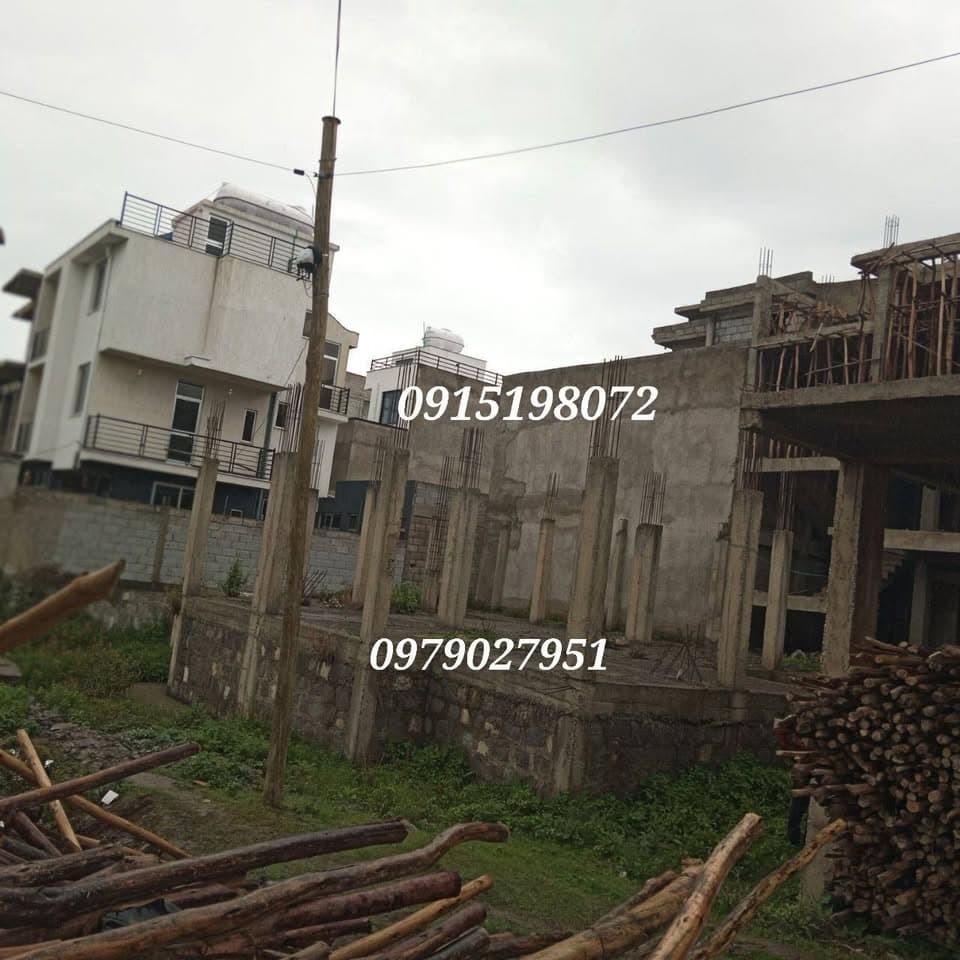
If you miss the deadline, the city can end the lease and take back the land. This matters when you buy an empty plot or an unfinished house. You inherit the deadlines.
Transferring a lease right
You can sell a lease right, use it as collateral or bring it into a company as capital. The limit is the lease amount you already paid.
Special rules apply before construction starts or before it is half complete. Except for inheritance, a sale at that stage must follow a transparent procedure supervised by the city. The seller keeps the lease paid plus interest, the value of the construction done and 5 percent of the transfer value. The city takes the rest.
These rules discourage speculation. A person who keeps reselling plots without building can be barred from future auctions.
When you buy a lease right, you also take over every obligation in the original contract. That includes the unpaid balance and the construction deadlines.
What a buyer checks
Before you pay for a plot or a house, check these items at the sub-city land office:
- Title and lease certificate. Confirm the seller's name, the plot number and the size.
- Site plan. Confirm the boundaries match what you see on the ground.
- Lease contract. Note the use, the lease period and the years left.
- Payment status. Ask for the unpaid lease balance and any arrears.
- Construction deadlines. Check whether the plot is late to start or finish.
- Land use. Confirm the plan allows the building you want.
- Disputes and holds. Ask whether the plot has a court case, a bank claim or a transfer freeze. Addis Ababa has suspended transfers in some areas during title verification drives.
- Expropriation plans. Ask whether the area falls inside a planned road or renewal project.
Get a licensed lawyer to read the file. Forged papers and double sales exist, so never rely only on copies from the seller.
Foreign buyers and land
Foreign nationals cannot own land. Under Proclamation No. 1388/2025, they can own a house and hold a lease for residential construction. The land must come from public bidding. Read our guide on buying property in Ethiopia as a foreigner.
Taxes on a lease transfer
Lease registration carries stamp duty of 0.5 percent of the value. A house sale with its land carries other taxes too. See our property tax and fees guide.
Where to find land in Addis Ababa
Plots and houses on large plots appear most often in growing areas such as Ayat, Bole Bulbula and Lebu. Browse current land for sale in Addis Ababa, or compare older houses on good plots in houses for sale. For the full purchase process, read how to buy a house in Addis Ababa.
Frequently asked questions
Can you buy land in Ethiopia?
No. The state owns all land. You buy a lease right from the city or from a current holder, usually for up to 99 years for residential use.
How long is a land lease in Addis Ababa?
Up to 99 years for residential housing. Commerce gets up to 60 years and industry up to 70 years.
What is the land lease price in Addis Ababa?
The 2026 benchmark reaches ETB 60,688 per square meter for prime allotment land. Auction prices vary widely and some bids exceed ETB 100,000 per square meter.
How much is the down payment for a land lease in Ethiopia?
Proclamation No. 721/2011 sets a minimum of 10 percent of the total lease amount. The balance is paid in annual installments with interest.
Can I sell my lease right in Ethiopia?
Yes, up to the lease amount you have paid. Sales before construction is half complete follow a city-supervised procedure, and the city keeps part of the price.
What happens when a land lease expires in Ethiopia?
You can apply to renew it 10 to 2 years before expiry at the benchmark price of that time. If the lease is not renewed, you must hand back the land.
Sources
- Urban Lands Lease Holding Proclamation No. 721/2011 (Federal Negarit Gazeta)
- Addis Fortune: Addis Abeba reprices land market, sends lease costs soaring
- Addis Fortune: High-stakes land auctions resurge in Addis Ababa after a half-decade hiatus
- UNEP LEAP: Urban Lands Lease Holding Proclamation No. 721/2011
- Mondaq: Foreign nationals can now own residential property in Ethiopia
This guide is general information, not legal, tax or financial advice. Rules and prices change. Confirm details with the relevant office or a licensed professional before you act.